

When we speak of healing at Yogveda and Yoga Habitat, we are looking at the intersection of three profound worlds: the ancient clinical diagnostic tools of Ayurveda, the systematic spiritual technology of the Bihar School of Yoga, and the modern physiological framework of Western Allopathy.
To understand Yoga Therapy is to understand that it is not a “one-size-fits-all” workout, but a precise, bio-individualized medical intervention.
In the Ayurvedic tradition, disease (Vyadhi) is rarely seen as an isolated event. It is the result of an imbalance in our internal environment. As the Charaka Samhita states:
दोषधातुमलमूलं हि शरीरम् । (Dosha-dhatu-malamulam hi shariram) “The body has for its foundation the Doshas (energies), Dhatus (tissues), and Malas (waste products).”
Yoga Therapy, when guided by Ayurveda, uses the 8 limbs of Yoga to restore this foundation. While a standard Yoga class might focus on the outward shape of a pose, Ayurvedic Yoga Therapy focuses on the energetic effect. For example, a person with a Western diagnosis of hypertension (high blood pressure) is often experiencing a Pitta or Vata imbalance. In this case, we do not just “do yoga”; we select specific cooling Pranayama (breathwork) and grounding Asanas to soothe the nervous system and arterial walls.
The International Association of Yoga Therapists (IAYT) provides the professional bridge to Western Allopathy. In the eyes of modern medicine, Yoga Therapy is a “biopsychosocial” intervention. This means it addresses the biological (physical symptoms), psychological (stress and trauma), and social (lifestyle and environment) aspects of a condition.
When a patient comes with a diagnosis from a Western doctor—such as Type 2 Diabetes, Rheumatoid Arthritis, or Clinical Anxiety—Yoga Therapy acts as a complementary clinical path.
For Structural Conditions (e.g., Scoliosis or Herniated Discs): Instead of general stretching, the therapist applies specific bio-mechanical alignment to stabilize the spine, often avoiding the “over-stretching” that can happen in public classes.
For Systemic Conditions (e.g., Autoimmune Disorders): The focus shifts to the immune system. We utilize techniques that stimulate the lymphatic system and calm the “fight or flight” response, which is often overactive in chronic illness.
To reach the deeper layers of healing, we look to the stalwarts of the Bihar School of Yoga, who pioneered the clinical application of Yoga Nidra. As Swami Satyananda Saraswati taught, true healing begins when we transcend the physical body and access the subconscious mind.
योगः चित्तवृत्तिनिरोधः । (Yogaś citta-vṛtti-nirodhaḥ) “Yoga is the cessation of the fluctuations of the mind.”
By taming the “monkey mind,” we allow the body’s innate intelligence—the Prana—to flow where it is needed most. For a person suffering from Western-diagnosed Insomnia or PTSD, Yoga Nidra acts as a deep nervous system “reset,” providing a level of rest that sleep alone often cannot achieve.
A Yoga class is like a general vitamin—it is good for everyone and promotes overall health. Yoga Therapy is like a specific prescription.
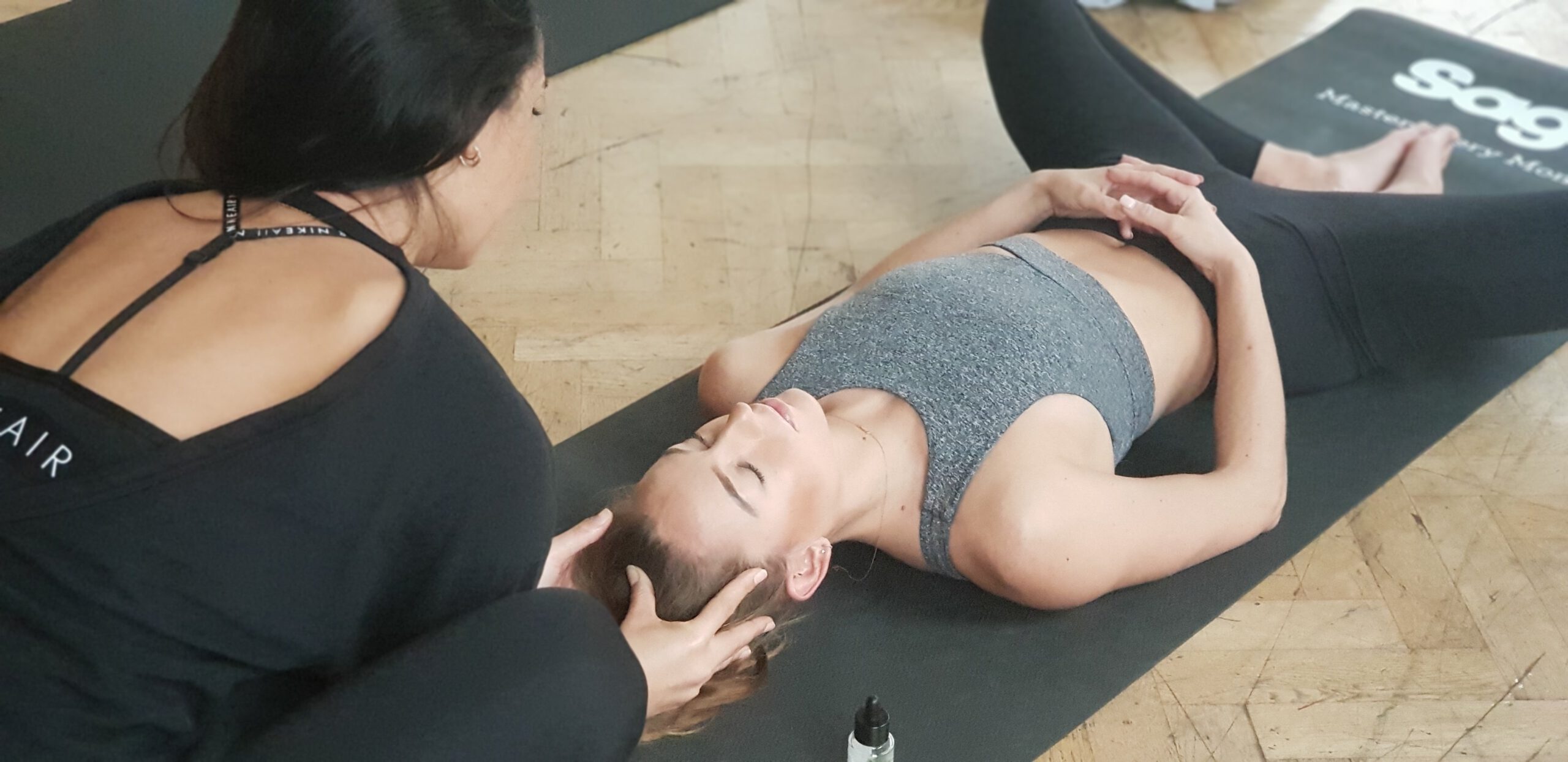
In a therapy session, we acknowledge that the body is a sacred temple where Hindu Dharma and science meet. We use Mantra (sound vibration) to heal the cellular memory, Mudra (gestures) to redirect energy flow, and Dhyan (meditation) to achieve the stillness necessary for cellular repair.
By following the Yama and Niyam—the ethical foundations of Yoga—the practitioner becomes more than just a student; they become a participant in their own healing. This journey “beyond the poses” ensures that whether you are dealing with a physical ailment diagnosed by a modern doctor or a spiritual exhaustion from the modern world, you are treated as a whole, divine being.
Through this path, we walk gently on the earth, transforming our personal health into a source of strength for our families and the generations to follow
© 2010 – 2026 Yoga Habitat. All Rights Reserved.
